The Creators | Sindhoora Ganesh

Nivedita Salar, Class of 2019

The Creators is a fortnightly series of artist profiles of Ashokans who are actively involved in different creative fields including music, photography, creative writing, and visual or performing arts.

Sindhoora Ganesh is a third-year Economics major at Ashoka University with a flair for painting. She launched a venture last semester, “Small Arts”, where she puts up miniature oil painting canvases for sale. She has held two highly successful and appreciated Small Arts stalls at different Haats in the previous academic year, and is looking to do some more work this year as well. This week, I sat down with Sindhoora to get to know more about Small Arts and the artist behind it.

Sindhoora Ganesh at a Small Arts stall last semester | Image courtesy: Sindhoora Ganesh

How did Small Arts begin? Is there a meaning behind its name?

When I was in Bangalore, I went to a craft store and saw these little canvases there. I used to paint a lot of canvases, usually A4 or bigger in size, and I thought that I should try painting one of these little ones as well. I painted a little night sky and realised that this little canvas was very convenient to keep on my bookshelf or on my table, and if someone wanted to own a piece of art it was much easier than hanging up a bigger canvas on a wall. Initially, I had not planned on selling them but a friend suggested that I share my artwork with other people. It was only a hobby for me. Sometimes, I painted something and gifted it to someone, but I never thought of turning it into an entrepreneurial venture. I was also hesitant about starting because I was an old-school artist: I liked painting landscapes and such things and I didn’t know how those would be received.

I put a lot of thought into the name before deciding on Small Arts, I decided against naming it something fancy. The name also represents the happiness we can get from the smaller things in life and smaller pieces of art.

Why do you do what you do? Is art a hobby, a form of therapy, or something entirely different for you?

I would say that it is a mix of a lot of things. I started off as a kindergartner who just liked colouring. I started attending classes later, but I was more inclined towards drier mediums like colour pencils. My drawing teacher suggested that I try watercolours and I realised that I was not too bad at it! So watercolours became the first medium that I tried. After this, painting became a release for me, a release from the daily schedule. It was therapeutic because it helped me get away from the work and the monotony around me, and it is definitely a hobby because I have been doing it for so long now! I always liked seeing something come to life through my interpretation of different images or photographs, or anything that appeals to me. I do it in my free time to calm myself down; it is a mix of a hobby and a stress buster.

What is your creative process? Do you plan sales and work on them accordingly?

My first sale was based entirely on intuition. I knew I wanted to do landscapes, and my first paintings were just different landscapes full of colour, none of them was alike. In the second sale, I went according to the demand I saw because I noticed a recurring pattern in what was being requested by people. Hence a lot of thinking went into the second sale. And now for my third sale, I know exactly what works for the crowd and what doesn’t.

Is there any artist that inspires you? A particular scene or object in nature? What is your favourite thing to recreate on a canvas?

There is an artist I came across recently — Tjalf Sparnaay — apart from the regular classics like Van Gogh. Sparnaay is a mega-realistic artist. When I saw his painting for the first time I thought it was a picture. He paints everyday objects like a loaf of bread or something, except on a bigger scale and incredibly detailed. Mega realism really appeals to me, and it is something I definitely want to try someday. In Small Arts, the two most recurring themes are starry nights and sunsets, because both of these colour schemes are just beautiful. Apart from these, I am always experimenting but I stick to different aspects of nature. Sometimes when I go out, maybe when I am on the road, and I see a pink and blue sky it really appeals to me. Converting them into my own interpretations, my own colours, and experimenting with different colours and shades and hues is something I really like.

On bigger canvases, I do a lot of florals, lots of flowers, because I’m a big fan of colours. Flowers in landscapes are one of my favourite things to recreate.

What are your favourite artworks, by yourself and by other people?

There’s a small story behind my favourite artwork. I had gone to an art gallery in Bangalore and I came across a painting of two peacocks, a white peacock and a colourful one, and it was humongous. My dad wanted to buy it for the house but my mom said: “No, Sindhoora will paint it and we’ll put it up on the wall”. This was when I had just started going for oil painting classes, and I thought that it was too challenging a task, but after 3 months I did it! It has knifework so it has a 3-D effect and it’s a 3*2 feet painting of two peacocks, in the drawing room. It was a big project that took me three months to finish, and it was a big achievement. Another favourite artwork of mine is a pencil sketch I made for my mum on her birthday.

An oil painting by Sindhoora

On this campus, I think there are so many beautiful artists, people have so many different ways of expressing their art — there’s modern, there’s abstract, pencil sketching. Amongst the lot, I really admire Kriti Garg’s (Founding Undergraduate batch) work. Her sketches and her artwork is just something else; I am always fangirling about it. Amongst people on campus, she is the first person who comes to mind as someone I admire. I do follow a lot of people on social media; I see a lot of things, and it really helps me broaden my spectrum as well.

Are there any memorable stories behind some of the things that you have painted?

One story was about the peacock painting that I mentioned. Once, when I was painting I just happened to use a fan brush with some white and red and it created this beautiful cherry blossom, and it is still in demand and people still want me to make it, even my friend’s mum! It’s very nice to see something spontaneous work out so well.

Are you a trained artist? How many years of practice did it take for you to reach the level of artistic skill that you are at?

It hasn’t been a continuous journey; I had to keep taking breaks because of academics and other commitments. It started off in middle school with sketching and other basics, and proper painting classes in 8th to 10th; that is when I started oil painting. I sharpened my skills in 11th–12th. I had to give art a break in 10th because of boards. In 11th, I started going for classes again and gained more finesse. So, I think that makes it four years of training, but I can’t tell exactly because it is just continuous practice that makes one better and better.

When can we see the next Small Arts sale?

I’m hoping that the next Haat has my sale, the winter haat or anything that comes before it. It’s a nice platform because there are a lot of other art stalls and I get to learn a lot from them. This time I will have different sizes, smaller and bigger ones, the smallest ones being 6*6 cm, and the biggest being 10*10 cm. Painting in miniature is really hard because it requires a lot of focus, but I think it pays off in the end when I walk into someone’s room and see my little painting on their desk or on their shelf.


The author is a visual arts correspondent for the Arts & Culture column of The Edict.

Visiting London during Brexit week

Isha Goel recounts her time in London, sitting for three-hour long classes, listening to prominent political leaders of the UK speak about policy and discovering the best vantage point for a bird’s eye view of the Queen’s City.

Major at Ashoka: Economics, with a minor in Political Science

Course at LSE: International Political Economy

I was always interested in both Politics and Economics, but didn’t know how to combine the two. Spending my summer at LSE helped solve this problem. The International Political Economy course offered at LSE was the ideal course for me, as it helped me decide my major, as well as what I wish to study in the future. IPE turned out to be quite an experience, and not just a course because of the time and place. Debating about sensitive topics like trade agreements (in the IMF and World Bank), the global economy and the EU, while sitting in London during the crucial month of June (the same time as Brexit Week) while UK was determining its stance towards trade and the global economy, was particularly an exciting experience.

Isha on a busy London street along the LSE campus

Most discussions in class felt like debating inside the World Bank or the IMF, owing to the diversity of students in the course, and the strong yet informative stance they held about their respective countries. What helped me gain most from this course was the foundation I had been able to build through the classes I had taken in my previous semesters at Ashoka. Game Theory in ‘Foundations of Economic Reasoning’ and ‘Conflict and Cooperation in International Politics’ with Professor Raghavan particularly provided clarity in understanding a number of key concepts discussed at LSE.

It is certainly not an easy task to attend and be attentive during 9am classes that run for 3 hours everyday followed by discussion sessions, especially when you’re sitting in the heart of London during summer. As someone who assumed that a summer abroad would essentially turn into a solo vacation, I was honestly overwhelmed by the intensive course structure and workload offered for a summer course. However, looking back,

I realised that the compact and back-to-back 72 hours of lecture allowed me to immerse completely in a single topic, something students regret not being able to do in an undergraduate programme due to multiple courses and extracurricular commitments.

The summer abroad programme enabled me to explore a subject I am passionate about without such constraints. Besides being a thoroughly engaging class, the LSE Lecture Series hosted a chain of eminent political leaders (one of them being Kenneth Clarke, who has been sentimentally described as the “best Prime Minister the UK never had!”) which provided the IPE students with first-hand knowledge of the form economic policies take in the real world of global politics. Thus, political theories and economic agreements discussed in class were put to the test during the Lecture Series, widening the discourse on global economy, and showcasing the loopholes in such agreements on paper versus in reality.

During my stay in London, I realised that Google Maps becomes your best friend, one can never have enough of Oxford Street, and the best view of London is not from the London Eye but from the top of the St Paul’s Cathedral! I would finally like to thank Ms. Anuja Kelkar for providing me with valuable advice while I was applying to LSE and being available at all times to help with the application.

Disclaimer: The Edict would like to thank Ms. Anuja Kelkar from the Office of International Programs for her support in making this series possible. Ms. Kelkar is the one-woman army at the office who helps Ashokans with the arduous process of applying for and attending summer school. If you wish to attend summer school during your time at Ashoka, it might be best to approach Ms. Kelkar as the first step.

Novak Djokovic: An Unanticipated Yet Unsurprising Renaissance

Vaibhav Parik, Class of 2020


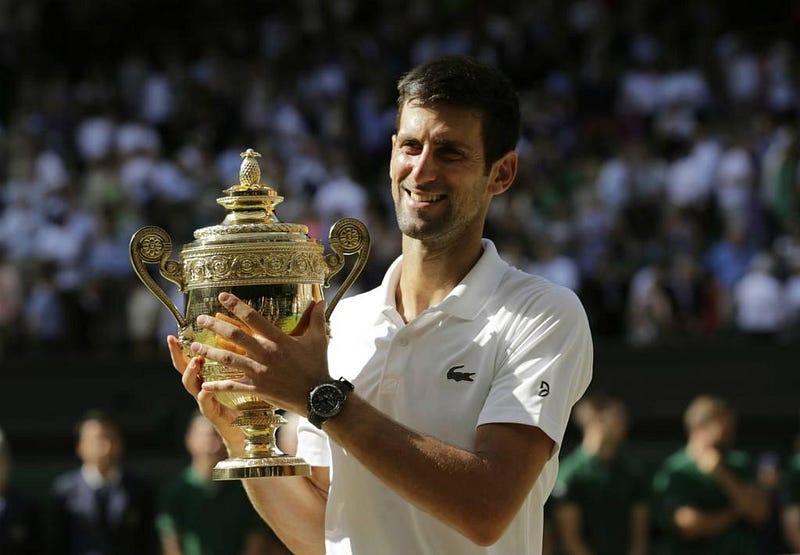
Djokovic holding his fourth Wimbledon trophy at the 2018 Championships

A year ago, John McEnroe made one of the feistier comparisons. Mentioning veteran golfer Tiger Woods’ issues with his family and wife, McEnroe conjectured the possibility of Novak Djokovic undergoing the same, while commentating on one of his Wimbledon matches. By the quarter finals, the tennis world knew that Djokovic was definitely facing some problem, but turns out, it was a physical one that many athletes face. An elbow injury forced Djokovic to call curtains on his already floundering 2017 season, a stretch that saw him win 2 ATP 250 titles, and enter just one Masters 1000 final.

When he returned to tour early in January, it became a subject of constant misfortune, be it the spirited fight he had in Melbourne earlier this year, going down to Chung despite his injury, or the faded ghost he seemed like at Indian Wells or Miami in March. There was a lot to question and wonder, and a comeback at the magnitude of Federer and Nadal’s feats seemed farfetched. But who would have thought that exactly one year on from his unfortunate retirement at Wimbledon 2017, that Djokovic would be hoisting the same trophy himself?

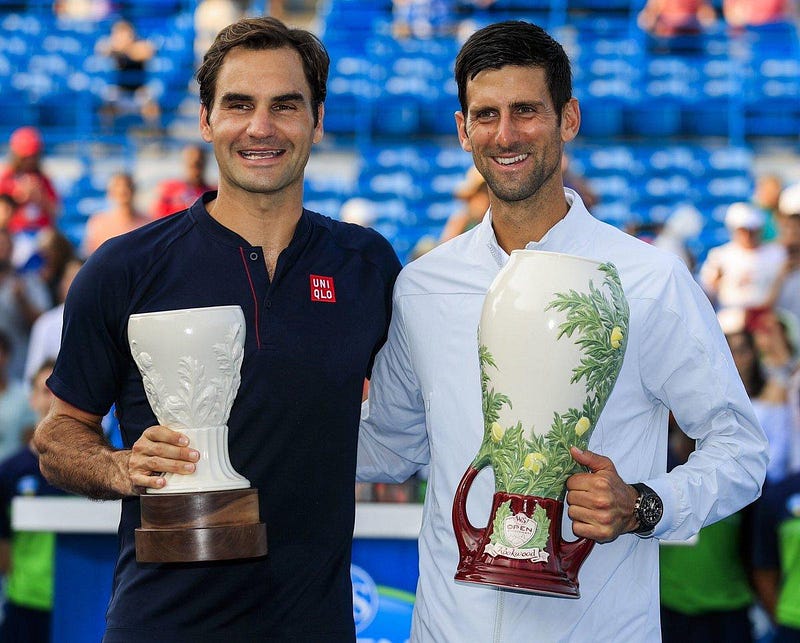
In what has been a headlining tennis story over the last two months, Novak Djokovic won Wimbledon, in the process of which, he outlasted Rafael Nadal in a classic semifinal, before holding off Kevin Anderson to win his 13th Grand Slam, his 4th at the All England Club, and then roaring to victory at the US Open. He even went on to achieve the Career Golden Masters(the achievement of winning each major Masters and Grand Slam event at least once) at the Cincinnati Open, defeating Roger Federer in the final. This feat made him the only player to have won all 4 grand slam titles, the year-end ATP finals and all 9 ATP Masters 1000 titles (the most important tournaments on the tour after the slams).

However, as unexpected as the timing of Djokovic’s comeback seems, it was piecing up together as early as May, when his long-standing coach Marian Vajda, rejoined the team after a year of splitting up. He reoriented Djokovic’s approach to the sport and moved him to his competitive mindset from a rather philosophical one he seemed to have adopted. This reorientation and his performance on clay seemed to suggest an upward trajectory, even if it ended with a stinging defeat in the French Open quarterfinals. At that point, Djokovic said he was unsure of playing the grass season.

But that moment of doubt was followed by a runner up showing at Queen’s Club, where Djokovic seemed to look quite good. Ranked 21 at the beginning of Wimbledon, Djokovic put together a step-by-step run which involved him defeating British no. 1 Kyle Edmund on home turf, followed by a quarterfinal victory over Japanese star Kei Nishikori. Against Nadal in the semis, Djokovic did absolutely what his game is known most for: enduring the toughest of opponents in the closest of matches. Despite Djokovic’s 10–8 victory in the fifth set, the difference in total points won was just 4 more points won by Djokovic (195 to Rafa’s 191). This victory was arguably a huge confidence booster for Djokovic, who subsequently sailed through the final against a fatigued Anderson.


With the Cincinnati Masters title, Djokovic successfully completed the Career Golden Masters

Almost a month later, at the Cincinnati Masters, Djokovic was trying to relieve the pressure off his shoulders as he began his quest for the Career Golden Masters. He looked nervous in the first couple of matches, particularly when he was down a set in the second round. As matches progressed, the play intensified, with Dimitrov stretching him to the limit, followed by Raonic and Cilic’s spirited fightbacks to force deciding sets in the quarters and semis. But Djokovic found a way to win, just like the old times of his dominance. As a result, a final showdown with Roger Federer beckoned, their first meeting since the 2016 Australian Open. The challenge could have been very daunting for Djokovic mentally, as Federer had denied him the Cincinnati title thrice before in the final. But Djokovic was ready to play at his best against Federer, who looked comparatively rusty. A straight sets victory gave Djokovic the title he had missed in his large and diverse collection.

Often regarded as the Big Three, Federer, Nadal and Djokovic have stretched the connotation of athletic longevity in tennis. It was unimaginable, a few years back, for a tennis professional to keep playing beyond 35, or to maintain their top spots and win grand slams after 30. However, the three of them have collectively dispelled this myth with their performances. Federer leads the way as the oldest no. 1, still winning Grand Slams at his age. Nadal followed suit, breaking his own records at the French Open and reigning as the current no. 1. With them came the rebirth of an old and dominating rivalry, starting 2017. But by redefining the boundaries of fitness and stamina, Djokovic at 31, joins the duo in 2018 to complete the historic triumvirate. Ten years since he won his first grand slam at the 2008 Australian Open, it seems another fitting visit to history, as Djokovic came out and broke the Fedal duopoly.

This victory does although, add to the strange situation tennis has been in for the past two years. The tennis equation remains complex with the variable nature of next gen stars like Alexander Zverev and Nick Kyrgios, who cannot seem to take the place of the old guard, particularly at the grand slams. Add to that the rise of Juan Martin del Potro, and the possible comebacks of Stan Wawrinka and Andy Murray, and the situation becomes harder to decipher. It remains unclear as to what or who is going to unseat the Big Three, particularly as they set the tone for the Grand Slams and the top spots. Nadal and Federer still occupy the top two spots, and Djokovic has clawed his way back from being no. 21 to no. 6, after Wimbledon, and to no. 3 after the US Open. It seems, like so many points in the last ten years, that for the near future the Big Three shall remain in control.

But for Djokovic, this resurgence is something personally significant. After his conquest of the French Open in 2016, which seemed to take something out of him emotionally, this second conquest in Cincinnati is adding fuel to Djokovic’s unforeseen, yet inevitable revival. If Paris was Djokovic’s elation, it seems that Cincinnati might very well prove to be the revitalization of his peak.

The Mauryan Debates

Apply here to participate in the debate!


When the current Editorial Board took over The Edict at the turn of the year, we had outlined our commitment to our readers and this University: “The Edict’s presence is a response to the unfortunate invasion of Ashokan discourse by social media, which has precipitated a move from reading and writing to scrolling and ranting.”

In keeping with our pledge, we bring to you the Mauryan Debates. This shall be a set of 5 One versus One Debates on contemporary campus issues that are polarizing and have been the subject of Facebook debates, dinner table discussions and often heated conversations. The role of a newspaper is to not just report on these matters but also to facilitate discourse, dialogue and dissent. These Debates shall be an opportunity for us to come together as a community and vociferously, yet prudently, partake in public discussion.

The ancient emperor in whose name our University flourishes was a champion of reason, public deliberation and argumentative discourse. The most important of the 4 historic ‘Buddhist Councils’ was organized in the 3rd Century BC, by Emperor Ashoka. These councils didn’t just concern themselves with religious principles but also offered an opportunity for open public discourse. In following with this tradition, and what we consider the responsibilities of a newspaper, we present to you this event.

There shall be no time limit for the speakers. However, they will have to abide by the word limit for pieces submitted to the Opinions Sections: 1000+200 words. All those who are interested will have to register their interest with us ahead of time, and the pieces need to be submitted to us before midnight on Sunday (23rd September).

The motions for the 1st Mauryan Debates are as follows:

  1. “Perfectly abled individuals should not have the right to take the lift to the 1st floor.”
  2. “The proceedings and subsequent results of cases being tried by the Committee Against Sexual Harassment (CASH) should not be confidential.”
  3. “A Student Government is futile at Ashoka University.”
  4. “Are Ashoka’s students worthy of Emperor Ashoka’s ideals?”
  5. “Ashoka University as an idea has failed.”

On the 24th of September, Monday, the Multi Purpose Hall in the Academic Bloc shall transfigure into our very own Agora. We expect one and all to join us embodying the greek spirit of ἀγορεύω (‘Speaking in Public’), while staying true to the spirit of tolerance, parley and hearkening that Ashoka stood for.


“Concord therefore is meritorious, to wit, hearkening and hearkening willingly to the law of piety as accepted by other people. For it is the desire of his Sacred Majesty that adherents of all sects should hear much teaching and hold sound doctrine.”

– Emperor Ashoka, Major Rock Edict XII.


Apply here to participate in the debate! You could also write to us at edict@ashoka.edu.in.

The JCB Prize for Literature: Celebrating Indian Literary Fiction

Vandita Bajaj, Class of 2020

The JCB Prize for Literature was instituted earlier this year with the intention of providing greater exposure to Indian authors as well as recognizing the integral role played by translators in the nation’s diverse literary tradition. The winner of the award is to be announced on 27th October 2018 and will be awarded Rupees 25 lakhs as prize money (the five books that make it to the shortlist will receive Rupees 1 lakh each). Additionally, if the winning book is a translation, the translator also wins Rupees 5 lakhs. The prize money makes it the richest literary prize in India.

The JCB longlist | Image: The Wire

The value of the prize isn’t solely the monetary reward; the focus is also on enhancing the public image of the chosen works and their authors. Rana Dasgupta, award-winning novelist, essayist, and Literary Director of the JCB Prize said to GQ magazine: “We have a large marketing budget to get the conversation going around their work, and through it, on Indian literary fiction. Take the Booker Prize: the prize money is £50,000, while the annual budget is actually about £1.5 million. The winning titles’ sales multiply 8–10 times. It’s that sort of impact that we’re trying to create.”

In his role as Literary Director, Dasgupta’s responsibilities include “holding the prize to the highest literary standard” and appointing the five-member jury that decided the longlist, shortlist and the winner. This year’s jury is headed by Indo-Canadian Filmmaker Deepa Mehta, and includes entrepreneur and scholar Rohan Murthy, novelist and playwright Vivek Shanbhag (his own novel Ghachar Ghochar written in Kannada and translated into English by Srinath Perur, has garnered critical acclaim), astrophysicist and author Priyamvada Natarajan, and translator and Indian classical languages expert Arshia Sattar. Anuya Jakatdar, co-host of the popular Books on Toast podcast, described the jury as “the most intense and acclaimed book club anyone can be a part of.”

The ten books that made it to the longlist, announced last week, include works by literary bigwigs such as Nayantara Sahgal (When the Moon Shines by Day), Kiran Nagarkar (Jasoda) and Jeet Thayil (The Book of Chocolate Saints), who have been recipients of the Sahitya Akademi Award. The list also features two debutante writers Devi Yeshodharan (Empire) and Shubhangi Swarup (Latitudes of Longing). Two translated titles made it to the longlist — Perumal Murugan’s Poonachi, translated from Tamil by N. Kalyan Raman, and Benyamin’s Jasmine Days, translated from Malayalam by Shahnaz Habib.

The emphasis on translated Indian literature is the result of a conscious effort to bring to the limelight writers of regional languages as well as translators, whose work in increasing the accessibility of literature often goes unnoticed. JCB’s bid to encourage translations is evident in the rules set by them; publishers can submit a maximum of four entries, and out of this two have to be translations. This year, 22% of the total entries were translated works. The number is expected to go up to 50% — 60% in the coming years as publishers will commission more translations to be able to submit four books. While the subject of translations has been hotly debated with the question of “what is lost in the process” being raised repeatedly, Vivek Shanbhag argues that “translation always get you a new reader and new responses. People who do not share the same culture and ethos also respond. When a work goes beyond its original language, it acquires a new and different meaning, which is always a pleasure for a writer.”

In the forthcoming years, the JCB Prize hopes to generate the level of excitement and conversation as the Man Booker and the Pulitzer. Indian readers of literary fiction, too, use these awards as guides to decide what they should be reading next. The White Tiger by Arvind Adiga sold 200,000 copies in India alone, with HarperCollins publishing it after Indian publishers rejected it, once it won the Man Booker Prize. Moreover, people associate Indian literary fiction with authors of Indian origin, such as Jhumpa Lahiri and Salman Rushdie, whose global celebrity status guarantees conversation around their work. The JCB prize is open only to Indian citizens and hopes to make the authors household names, driving discussions around their works and paving the way for a new generation of writers and translators.

The objective of the prize is to curate an archive of literary works that will endure the test of time and speak to readers, both current and future, about the time in which they were written. In a multilingual country like India, there exists a tremendous variety of experiences and viewpoints; the JCB Prize for Literature is a promising endeavour towards understanding and appreciating the vast array of stories told by contemporary Indian authors. Perhaps the prize can do for the rest of us what it did for jury chair Deepa Mehta — “open a door to today’s India”.

While the distinguished Jury of JCB has given us their longlist, here is the verdict of some of Ashoka’s Professors on essential reads in the genre of Indian Literary Fiction:-

Prof. Vaidik recommends Natarajan’s illustrated book, A Gardener in a Wasteland | Image: Navayana

Professor Aparna Vaidik (Associate Professor of History): Srividya Natarajan’s A Gardner in a Wasteland (2011) is one of the most irreverent texts that students will read during their time at Ashoka. It’s a graphic novel on Jotiba Phule’s tongue-in-cheek take on Brahmanical belief systems. Imagine ‘Brahma sulking in polluting seclusion, menstruating through multiple orifices all over his body’! The text weaves the writings of Jotiba Phule (Gulamgiri and Shetkaryacha Asud) in with contemporary conversations around caste oppression, gender inequality, class hierarchies and racial injustice. The blending of the historical and the contemporary is done seamlessly in the text with the help of the graphics. It is beautifully illustrated by Aparajita Ninan.

Professor Janice Pariat (Assistant Professor of Creative Writing): Chetan Raj Shreshtha’s debut, The King’s Harvest (2013), consists of two novellas, both set in Sikkim. Chetan is a wonderful, evocative writer, and these stories, old and contemporary, bring the place and its people to life.

Another notable work is Peace Has Come (2018) by Parismita Singh. It is a collection of achingly good short stories springing from Bodoland, a turbulent part of upper Assam. Parismita, who’s also a graphic novelist, has quiet, understated literary grace and style.

Prof. Kothari recommends Samskara: A Rite for a Dead Man | Image: Goodreads

Professor Rita Kothari (Professor of English): The one name that leaps to mind is U.R. Ananthamurthy’s Samskara (1965). It’s a novel about the disintegration of an organic Brahminical community in an agraharam in Karnataka. The disintegration of the self, community, caste, and many other certitudes make this a significant novel to understand both traditional India and its relations with modernity. The novel is highly sociological and also existentialist in the questions it asks. Given the fact that this novel was translated by A.K.Ramanujan, India’s most well-known translator, who provides an amazingly textured understanding of “samskara” (and its multiple meanings) in the introduction, it is also a wonderful translation. This is a landmark in Indian literature.

Professor Tisha Srivastav (Assistant Professor of Film and Media Studies): A historical fiction novel, Empire by Devi Yasodharan (2017) is set in the time of the Chola empire, which is present-day Tamil Nadu. The protagonist, Aremis, is an intensely capable female Greek guard/markswoman who walks into the royal palace, wars, and falls in love with a man (she also flirts with bisexuality). While Aremis is depicted as skilled but unsure, her confidence grows through the plot. At one level, many passages are sometimes considered, sometimes stretched, but often quite self-reflexive about history, war, kings, positions and bardic lore.

As someone who reported on the tsunami in India for over a month, reading up on what one could find in English, on the ecological coastal history of Nagapattinam/Kanniyakumari districts in Tamil Nadu, I have retained a bird’s eye view fascination for the area. Which is strangely why the novel also satisfies one with a close up feel of street activity, away from royal chambers. Lines like “Toddy sits before us like captured moonlight” often mark a poet’s eye in this remarkable debut.

The morbid, slightly theatrical cover disappoints more than anything between the pages. The book itself is a thoughtful, empathetic, well-paced, long read. Try it for a glimpse of another state of India in another time. If you already like semi-thrillers inhaling a made-up tale about the past, well, this one is just a story refreshingly told.

P.S. When the novel came out, the Indian internet website SCROLL carried a respectful back and forth between the novelist on Chola sources and a historian. The mutual argument — what constitutes historical fiction.

The novel is available in print and on the Juggernaut app.

Professor Anjum Hassan (Visiting Professor of Creative Writing; Books Editor for Caravan): A Rebel and Her Cause: The Life and work of Rashid Jahan is a collection of short stories and plays by a now largely unknown but radical for her time Urdu writer, doctor and feminist, Rashid Jahan, from the early 20th century. The work appeared a few years ago translated by Rakhshanda Jalil. She also writes a wonderful introductory essay on Rashid that helps us imagine her as a person and a writer.


The author is an Arts & Culture staff writer for the Edict.

The Predicaments of a Post-Truth Era

When ‘Facts are not Facts’ activism is confused as radicalism

By Gaurav Nandan Tripathi, (Undergraduate Class of 2020).

The Oxford Dictionary declared the word ‘Post-Truth’ as the ‘Word of the Year 2016’, after an increase of about 2000% was seen in the usage of the term. Its use became pretty common during the American elections in which Trump emerged as the victor. The term ‘post-truth’ is used more in the political context than anything. In ‘post-truth’ politics, debates are framed more by emotions, rather than actual policy-oriented discussions and factual substance. The point which is being advocated will be repeated again and again in spite of factual rebuttals. Expert and informed opinions are secondary to emotions.

Descartes comes to Ashoka.

This kind of situation is mirrored in India and most of the world today. With the completion of four years of the BJP government, it is more and more evident how most of the political decisions today are more based on emotional impulse than strategic planning. Demonetisation is the first example which must come to everyone’s mind. The step was taken in haste, and Modi riding on the emotional and sensitive support of a major population of the country, kept advocating the decision which was flawed in its reason and implementation. Its intention was clear, but the implications weren’t considered while taking the decision. It’s a classic example of the era of post-truth, where a populist leader takes a big misleading step, and is backed by the emotions of people rather than their rationality. The decision is advocated again and again, while the goals are dodgy and remain fluid to change. People are asked by the leaders to suffer for their country for a temporary period, and the cycle continues. Today, we actually know what the decision was: a failure.

In fact, the side-effects of the post-truth era are not limited to policy decision. Nationalism and Patriotism are being used today as an excuse to criminalise dissent leading to the spread of belligerent public jingoism which is blurring the distinction between activism and radicalism in the minds of the masses. Voices against the government are being seen as voices against the Indian state. Dissent is seen as treason. These phenomena confirm how politics riding on emotions (of the majority or any particular ideology) flirts with dangerous majoritarian psychology of the nation and its people.

This situation is more ominous than it seems. In complexly diverse societies like India, it materialises the already existing differences between people. It creates fault lines between groups, where tremors of intolerance against each other’s existence rock the very foundation of the Indian state. The overwhelming voluptuousness of intolerance and hate in people, not only in India but all around the world, is being legitimised by the post-truth politics in the world today.

Recent arrests of five social activists in India is the most recent example of the cruelty which this era of politics brings along with it. When someone like Vivek Agnihotri calls “facts are not facts”, he is basically indicating the ‘fact’ that he’ll not believe what other wants to say. He’ll only believe what he feels is his right. Something similar was said by Rudy Giuliani (Trump’s attorney) when he remarked that “truth is not truth”. It is the typical reply which anyone who has to hide the truth will tell you. These are all the things which constitute the culture of post-truth. Half truths, concealed realities and a veneer of confidence; these are the axioms of living in a post truth era. The Ashokan space is also not free of its impact. The highly confident arguments in the debates (both in public and private sphere at Ashoka) are mostly based on shaky premises. Under the facade of the bourgeoisie english, emotions and sentiments are suppressed the rationality of arguments. These kind of things are the side-effects of living in an age, where opinions supercede a platonic sense of truth in the public discourse. Only our conscious and informed precautions and awareness can prevent us from being a victim of not only others, but sometimes even ourselves.

However, the saddest part is that the end of such an era is nowhere in sight. With emotions subverting rationality, and demagoguery being celebrated; we have entered the heydays of the post-truth era. Its inception is known and has been analysed at depth in letter and video; but it’s continuation brings ominous signs for societies and communities across the world today.

Adapting to Berkeley Standard Time

Sameer Nayak tells us about studying Industrial Psychology, scouring Durant Avenue for the best spots to eat and finding stray pianos around campus.

Major at Ashoka: Double major in Economics and Psychology

Course(s) at UC Berkeley: Social Psychology, Industrial Psychology

BERKELEY STANDARD TIME !

That’s an official thing here at Berkeley, where every class begins at least ten minutes late. Even the professors have come to accept this and advise us to not reach class before time! ‘Berkeley Time’ kind of signifies the atmosphere at UC Berkeley, where it’s common to spot people sunbathing or having a coffee, lost in their music. The UC Berkeley campus gives out very relaxing vibes, but don’t be misled by the laid-back atmosphere because underneath it, you will find plenty of motivated students hustling quietly in some corner.

The first thing that will hit you is the sheer number of pedestrians and cyclists. You will spot very few cars, as many students either take a long walk to class, or hire a bicycle to cover longer distances. The climate is great, so walking around campus is a pleasure.

Incidentally, during my stay here, the World Cup was underway and being an ardent football fan, I was pleased to discover a place where I could enjoy it — ‘Pappy’s Grill’. A nice little sports bar with good grills, it gets quite crowded during any major sporting event. Be careful to not get tossed around when a match goes on!

Berkeley has fantastic food unless you are on a meal plan, in which case you will have to juggle between your bad decision and spending extra bucks on good food. That said, the Berkeley mess is much better than the one back home. Berkeley as a town has much more to offer. ‘Durant Avenue’ is the go-to street for food enthusiasts. It has everything: from Korean and Thai, to Italian and Indian cuisine. A few must try restaurants in Berkeley are: Top Dog, Thai Basil, Gypsy’s Trattoria and La Burrita.

Sameer exploring Durant Avenue

The University Campus is really pretty. The path towards Sather Gate (the official University Gate) is usually filled with volunteers, so expect to get startled by sudden requests for a signature supporting various issues.

Berkeley is a college town driven by music and art. You can find plenty of niched yet aesthetic gifts shops, like Twisted Thistle and Tail of The Yak. There is also a great art-supplies shop called ‘Blicks Art Material’, (credits to Kriti Garg from the undergraduate batch of 2017 for telling me about this). I highly recommend visiting Rasputin Music and Amoeba Music for antique music pieces and records. One particular aspect I really found interesting in Berkeley was the concept of public pianos and keyboards. You just need to look around carefully to spot one.

As for my classes, I did not notice much difference between Berkeley and Ashoka.

It actually felt like taking just another regular Ashokan course, but with a beautiful landscape around and great weather.

I took two psychology courses, and both were really good (Definitely take the Industrial Psychology course, as it is not available at Ashoka, and my professor at the time was incredible). This course will shape you into a semi-professional HR executive!

One major/important benefit from Ashoka was that my knowledge about subjects other than my own really helped me in making conversation with students of other disciplines. I could see myself keeping up with professors and students on topics of art, literature and even philosophy.

Now, I am personally known to be a slacker among my friends but somewhere, between living separately from my home group and the beautiful view from my study table, I found myself studying harder, but what really made the difference at the end I think, was the passing mark. For most courses, the passing percentage is seventy! So as I mentioned earlier, underneath all these chilled vibes and smiling faces, the students do work well into the night to simply cross the line.

On an ending note I have a few bits of advice:

  1. Student trips are a great way to explore surrounding areas like San Francisco, Yosemite National Park and the Bay Area in general (and it’s a great way to get to know other summer students).
  2. Always carry your student ID around. You could be visiting a local attraction and might get a chance to avail a student discount on several facilities.
  3. I struggled for the first few days with the public transport (known as Transbay Area Services) but here’s a tip for that: The route F is for San Francisco and route 51B is for areas within Berkeley jurisdiction.
  4. San Francisco is to Berkeley as Delhi is to Sonipat, so you will find yourself going there a lot on weekends.
  5. Age restriction for alcohol, cigarettes and various herbs is 21. So be expected to be shooed away if you do not have a proper ID. The same goes for pubs in San Francisco so be prepared in advance.
  6. Last but not the least just enjoy and don’t forget the Berkeley Time!

Disclaimer: The Edict would like to thank Ms. Anuja Kelkar from the Office of International Programs for her support in making this series possible. Ms. Kelkar is the one-woman army at the office who helps Ashokans with the arduous process of applying for and attending summer school. If you wish to attend summer school during your time at Ashoka, it might be best to approach Ms. Kelkar as the first step.

Sonipat’s Economies of Vice

In the first piece by the Research Wing of the Edict, we explore the evolution of an infamous illegal shack outside Ashoka University, and the lure of catering to university students, in the village.

By Urvin Soneta (Founding Class), Sparsh Agarwal (Class of 2019), and Zainab G. Firdausi (Class of 2019).

On 23 August, 150 students from Jindal University were detained by officers from Rai PS in a “rave” party at a guest house called Anjani. Only a few days after the incident, on 28 August, the administration of Ashoka University issued caveats to students regarding venturing to illegal establishments outside campus, and how this maybe grounds for disciplinary action.

Both Ashoka and Jindal are located in and around Rajiv Gandhi Education City, an ambitious project by the previous state government to create a hub for universities in the Delhi NCR region. And although the project is laudable, its creators, perhaps, did not pay much heed to the context and location in which they were going to be placing students aged 18–25. Often feeling shut-up and fatigued within the four walls of their campuses, students have begun venturing out to unwind, and this how they end up in places such at Anjani.

Every Thursday night students start lining up at the gate to leave campus for the shacks outside.

Ashoka was set up in 2014 by a coterie of philanthropists and industrialists who desired to create a premier liberal arts University for Indian students. In the backdrop of this aspiring young university, there exist the aspirations of others nearby. The ambitious shadow of Haryana lurks; it’s fuelled by the desire to capitalise on the phenomenal urbanisation and migration taking place in Sonipat; wishing to cash in on any Indian college student’s obvious necessities: “juice, milk, and brownies” (euphemisms used by the owner of the shack to refer to the alcohol, cigarettes, and marijuana that was sold by him in our interview with him).

This is a tale of rising “confectionary shops” (another euphemisms used by the owner to refer to his outfit), rival groups, and the economies of vice.

“There’s Plenty of Juice to Keep this Economy Going”

In Sonipat, Thursdays nights are the new Friday nights. “So, what’s the scene?” is now the most popular phrase featuring any conversation post classes on Thursdays. It is with these words that students at Ashoka begin planning their evening of indulgence.

In the Summer of 2017, three years after the University opened, the first “confectionary shop” was set up 400 meters from the entrance of the University near the nearby Asawarpur village by a duo of brothers: Tonu* and Tohit*. Tonu, a former employee at Ashoka is in his early 20s, a student at Delhi University by day and businessman by night. ‘Tonu’s Sutta Point (SSP)’* was the first entrant into the lucrative ‘juice business’ in Sonipat last year. The opening of the campus had already brought a theka (alcohol shop) and a cigarette shop to the vicinity, but as Tonu recounts, “The students wanted to have ‘juice’ and ‘cakes’ late at night at a place that wasn’t far away and offered comfort. I offered it to them”. One can only speculate whether having worked inside the Ashoka Campus transformed Tonu’s entrepreneurial vision or not.

Tonu recounts that the immediate success of his “confectionary shops” was largely because of his own “goodwill” among students. Across the road from Tonu’s shack there’s a police headquarters under construction, and he doesn’t yet have a license for his shop. However, his goodwill extends to the local police as well. Tonu admits that his “juices” are overpriced but that his establishment thrives on the loyalty of his customers. Nonetheless, the loyalty of his customers was soon to be tested with new entrants into this highly competitive market.

Twist in the Tale

Tonu’s success in the “juice” business opened up an unrealised market for the local community of Sonipat — one which had high risks, but proportionate returns. With a small initial investment and not too many costs (mainly rent for the land and the music- speakers and wages for his employees), Tonu had created a brandname for himself. He also created animosity, and jealousy, which was soon going to start a vicious cycle of violence, corruption, involvement of gangsters and ruthless business decisions.

Three months after SSP opened, a local from Asawarpur, Tunil*, decided to open his own “confectionary shop” across from Tonu’s. This competitor had local village support, muscle to flex, and a definite sense of humour (or just poor creativity), as was evident by the ‘original’ name that he picked for his establishment as well: ‘Tunil’s Sutta Point’(SSP)*. With a grand opening, and by offering free “juice, tea, and milk”, Tunil tried to rope in Tonu’s customer base. However, what started as a competitive market of vices where the students were just beginning to gain due to plummeting prices, soon saw an intervention from the village.

About the time of Diwali, Tonu and his brother Tohit were assaulted by a group of local villagers who demanded that they leave. They had found out that Tonu was from the village of Rai; and the relations between Rai and Asawarpur were like “India-Pakistan”, Tonu explained. Tohit was admitted into the ICU, Tonu was only slightly better, and the original SSP shack had to temporarily close its shutters. Tunil now had the monopoly, and he intended to keep it. However, soon another “juice shop” opened up beside Tunil’s- “Tonny’s”*. This time, Tunil faced competition from within the village.

Meanwhile, Tonu initiated charges against his competitors for the assault while completing his education at the Sri Guru Tegh Bahadur Khalsa College in Delhi. It was at the time of Ashoka’s annual fest in February that he decided to return to Sonipat. In one move, Tonu had retaken control of the juice business in Sonepat pushing out Tunil and assuaging village animosities.

A glimpse from inside SSP on one of its most lucrative nights: before college shut for the summer.

All Is Not Lost

Tonu has worked out a successful partnership with Tonny, a local from Asawarpur, who has accepted him claiming that Tonu is not really from Rai, since his father was from another village. He now works in conjunction with the village panchayat (with whom Tonny has good relations). Occasionally, the police visit. However, Tonu claims that the sphere of influence Tonny now casts prevents them from creating any problems for him or his customers. However, this newfound legacy hasn’t impressed all. “This is just a mafia group”, as one of the security guards on campus recounts.

Tonu has fought off pressure from the University to close down his “juice and confectionary shop”. He looks upon himself as someone who is creating employment opportunities for the village of Asawarpur while also benefiting those like Taveen* who sells cigarette and tea across the road from his shop.

As the 2018 Spring Semester was coming to an end, the saga for control over Sonepat’s Economy of Vice stood such that Tonu’s Sutta Point was owned by Tonny, and managed by Tonu. The latter’s goodwill was soaring, credibility was secure and margins were increasing. On a good Thursday night he would make profits upwards of Rs. 30,000. For him, business was booming, while he planned to expand. In April, the second branch opened up close to the O. P. Jindal University: ‘SSP WestHouse’.

SSP’s doors remain shut all day and night now

And while he had expressed hopes to open a “chain of ‘confectionary shops” in Rajiv Gandhi Education City, there seem to be no signs of him recently. The SSP shack has not been open on Thursday nights in the past two months, with one exception in July. It has been two Thursdays since undergraduate students have returned to campus, yet there seems to be no sign of shutters going up. The abrupt closure has forced students to party on the road by the theka, something which is not nearly as glamorous as SSP. The closing maybe due to pressure from college authorities, village politics, or sheer fear after the debacle at Anjani. But with a comeback story as daring as his, one can be sure Tonu will return. The real question is how the second act to the saga of the most entrepreneurial business venture in Sonipat will be written.


*Names have been changed.

Urvin Soneta is a former Undergraduate Student who was in the Founding Batch. Sparsh Agarwal is the Managing Editor of the Opinions Section at The Edict. Zainab Firdausi is Managing Editor of the News Section at The Edict.

Based on interviews with ‘Tonu’,Taveen, and Ashoka’s Security Team.


.

The Creators | Armaan and Shaayak

Kartik Sundar, Class of 2020

The Creators is a fortnightly series of artist profiles of Ashokans who are actively involved in different creative fields including music, photography, creative writing, and visual or performing arts.

It’s no secret that today Hip-Hop is a dominant form of music world over. While to most of us, Indian hip-hop seems to revolve around the Yo Yo Honey Singhs and Badshahs, Armaan and Shaayak (class of 2020) are out to change that perception.

In the studio: Shaayak and Armaan (L-R) | Image Courtesy: Armaan & Shaayak, Class of 2020

Although his background is in slam poetry, Armaan’s never shied away from his hip-hop influences. Presently working with Azadi Records, he is eager to break into the Indian hip-hop scene in a big way. He aims to bring lyrical music to the forefront of a hip-hop culture that seems to have lost an integral part of its roots. More than anything, though, Armaan sees hip-hop as a way to express his emotions — both his personal troubles as well as his dissatisfaction with the government.

Shaayak is something of a prodigy on the guitar. It’s not uncommon for people on his floor to wake up to blaring electric solos in the middle of the day, but that’s just the level of dedication the diminutive producer has to his craft. An avid follower of hip-hop in all its forms, Shaayak aims to bring something new to the stale state of production in India

I sat down with the duo earlier this week for a discussion on their inspirations, future, creative process, and their thoughts on the contemporary hip-hop scene.

Kartik: Armaan, you have a background in slam poetry. How did you get interested in that? And does it have any influence on your rapping?

Armaan: For me, slam poetry started because I got to do a workshop with Phil and Sarah Kay, and I really wanted to meet them. So, I had some poetry sessions with them and then I started performing. During one of those performances someone asked me if I rapped, and at the time, I didn’t. But I performed this piece that felt like a blend of slam poetry and rap. People seemed to like it.

Who are the artists that inspire you and influence your work?

Armaan: Nas, J Cole, Eminem and Kendrick and, currently, Denzel Curry.

Shaayak, I know you are a big fan of Denzel Curry. How has your production style been influenced by him or other artists?

Shaayak: I have always been trying to make music, be it on a guitar or whatever. Then I discovered that everything we hear is made on a computer. And I thought, “that’s something I am good at”. I always wanted to learn more instruments. Obviously, that takes a lot of time. But I already know what I want to play on those instruments so with that vision and skill, which took me a lot of time to develop, I felt like I could do something.

Production is not an easy task. How long did it take you to acquire the skills?

Shaayak: I would say it took me around three years because, in the eleventh and twelfth grades, I wasn’t studying. I was completely focused on music. So, every day, I used to play the guitar for one and a half hours and spent the rest of the time on YouTube, watching music stuff. So, I picked up and I learnt and just kept going. In my first semester of college, my creative project for Professor Alex Watson’s class was making a song. The idea of being a producer was always in the back of my mind. I have always enjoyed rap music, given the producer has much importance as the rapper. The reason is that in so many songs the contribution of the producer is phenomenal.

Especially now rap is at least 50% production and 50% rap. On your song too it says “Produced by Shaayak”, what do you think about the recent rap scene?

Armaan: Honestly, it is mostly the Production. I’d say 70% of it is the producer.

Most rap songs nowadays are extremely generic; it’s as if a beat is made and words are strung together to match the beat. Your song, however, is more different: both the beat and the lyrics are matched very well and given their due. What was the process behind that?

Armaan: The only reason I got into the scene right now is because I think most of the rappers out there are utter trash. So, it makes a lot of sense to me to just get right into it and preserve the tradition of hip-hop in a way, because I don’t see that being done by people like Honey Singh and Badshah. Shaayak and I discussed a few themes because we wanted to try out a standard template first. The idea behind the first track (Quicksand) is to get people’s attention, and then hit them with more content driven music. The process basically is discussing themes and trading songs and sounds that inspired us with regard to the themes. For example, if ‘ambition’ is the theme, and I have ten or twelve lines written I send them to him; he has an idea and then we decide the technicalities of the music. There is a lot of back and forth.

The rapper, Armaan | Image Courtesy: Armaan & Shaayak

Your first track is an aggressive, braggadocious track. Do you want to also make more politically inspired music?

Armaan: Yeah for sure, because nobody is doing it right now! I think it’s because everyone is afraid. Nobody is talking about things that are happening in the country because there is a lot of fear that gets heightened by instances such as the attempted assassination of Umar Khalid. So, people are not saying things because they are worried that they will either get shot or get thrown into jail. We are in fact doing a track about that, just the fact that everyone is scared. I think if some of us stop getting scared, if I rap about it, then maybe others will stop getting scared too.

Aren’t you scared about what the consequences might be as your viewership grows?

Armaan: It definitely is scary, but there is no other alternative. I don’t want to remain silent and let go of the freedom that all of us are born with.

Have you faced any backlash yet?

Armaan: No, not really. The circles in which the track was circulated were really limited. Besides the politically charged tracks haven’t come out yet. But the beats are ready, the lyrics are ready. We just need to record. Once it gets out maybe I will face some backlash but right now, nothing.

What can we look forward to in the future?

Armaan: The next one we are going to do is a track called “Saffron Ablaze” which talks about how we are still not free. Because freedom is also a state of mind, it is not just being able to do things that you normally do in the world, it also has to do with what you can think about and what you can say. Lately, so much in this country has been counted as ‘sedition’. If your expressed views do not align with the popular opinion then it is counted as sedition, that’s not how it should be. This is some warped sense of patriotism that is being propagated because patriotism actually lies in critique.

Shaayak: For me, production and the guitar will go hand in hand. I don’t want to stop playing the guitar. In fact, I see it as an asset rather than as a detriment, because I can use it when I want to. So many songs people listen to, they don’t even realize that there is live instrumentation on it. Especially now hip-hop is varied and there is such a wide scope to do things. I might combine it with production by doing a solo or using it as a loop, just whenever inspiration strikes.


Armaan and Shaayak’s first track, “Quicksand”, is out now.

Find them on social media: https://www.instagram.com/armaanyadav/


The author is a staff writer with The Edict.

Student Government Introduces New House System for Intra-College Activities

Akshaya Jose Devasia, Class of 2020

In the orientation week for the Undergraduate batch of 2021, the Student Government announced the beginning of a new ‘house system’.

The houses will be named after the primary Ashokan cities Taxila, Pataliputra, Ujjain, Nalanda, and Kalinga.

This is, in the words of a member of the Cultural ministry Rithika Abraham, an initiative to ‘instill a spirit of competition and sportsmanship within the Ashokan community’. She explained that this idea sprung from the SG’s realization that a majority of the student body tends to get so heavily wrapped up in academics that they barely engage in communal fun games or events outside the classroom.

The SG is hoping a programme of this nature would promote greater student participation in cultural and sports activities at a university level.

Currently, membership is mandatory for the First-Years, the YIFs and members of the house. Arnav Mohan Gupta, the Cultural Minister, said this would both give them a ‘house identity’ and be another opportunity to bring the YIFs and Undergraduate students together.

History Repeats Itself?

While this new initiative seems like a fantastic way to bring the Ashokan community closer, a similar house system was introduced by the Sports department in the past, and it failed to garner the participation and generate enough interest.

However, Arush Pande, the president and a vocal supporter of this system, remains very optimistic about the success of the house system this time. He says the chances of this student-led initiative backed up by a majority of the government are higher.

He said the SG was looking at building Ashokan traditions and instilling a sense of Ashokan spirit across the community. Arnav too emphasized that the approach and plan this time are relatively more detailed and well-planned.


A previous version of this article stated that the Office of Student Life started a house system in the past. The article has been edited to fix this error.