Ashokan Entrepreneurs | Jugnu

Pooja K. Kumar and Varsha Vadlamani, Class of 2019

In our little pocket of land in Sonepat, we do a lot to make our homes away from home “ours”. Posters, art and fairy lights have become staples and picking up zines and DIYs equally have become a part of every event on campus. Presenting, Shivani Bajaj and Kamala Rao, both from the Undergraduate Batch of 2019, and the co-founders of Jugnu: an entrepreneurship duo who were pivotal in starting this culture of art on campus.

Jugnu began with a simple idea of positivity. From that thought, Jugnu is now a full-fledged brand which has expanded its product range, is in talks with manufacturers outside and is planning on increasing its scale of operations. Shivani and Kamala have successfully turned a seemingly innocuous hobby into a legitimate business. What started out as one product, the famous ‘Letter-Lights’, has quickly turned into a popular business to the point where people are scrambling to get their hands on Jugnu’s beautiful DIY room decorations.

At the brink of expanding outside the red-brick walls of Ashoka, Team Jugnu, had a sit-down with us to give us a glimpse into their double-act as student and entrepreneur.

Both Shivani and Kamala contributed to each answer together.

How has Jugnu evolved over the past year? What are the highs-and-lows of this journey?

The message of Jugnu, which means ‘light in darkness’ or ‘firefly’, has evolved over our journey. Here, we’re all home away from home, and what we, as Jugnu, wish to do is make our customers’ rooms their ‘happy place’. What the world needs is ‘IN YOUR FACE POSITIVITY’, and that’s what Jugnu stands for. Over the last year, our product range has increased. This makes up one of the most fun parts of the process — the ideation. Running Jugnu is all about the excitement of creation for us. We scroll through Facebook or Instagram looking at existing DIYs for inspiration, but we add our own touch to it. Ideation is as fun as just going to each other’s rooms and saying, “Hey, let’s make this!” and then it gets made! On the one hand, we have truly put in some backbreaking work into Jugnu, but on the other, it’s been a labor of love.

The stressful parts, unsurprisingly, are the days before we have to set up a stall or meet deadlines. During the production of the Letter-Lights, the number of orders we got was physically exhaustive to manage along with the rigor of college. From that experience, we started talking to manufacturers, because we don’t want to skimp on the quality. Each product has to have a standard of quality that is worth the money. We want to put a product out there because it’s ready, not just because there’s some demand that we can hastily fill. But what is also amazing is that we always pull through.

When Jugnu had just started, we never thought we would go in the direction of expansion or manufacturers, but watch out, the Letter-Lights may have a comeback very soon!

Kamala and Shivani

One question everyone on campus regarding you entrepreneurs is ‘How do they do it?’ What keeps you motivated?

The motivation for all of this is the feeling we get on completing the orders. When we were making the Letter Lights, sometimes we had to do the mundne task of cutting and painting repeatedly, but every time we would switch the lights on at the end of the process, our mouths would drop in awe (laughs, wow, we are so humble). It’s motivating, because with such a product, you have to be incredibly precise and careful, so that final, luminous moment makes this work ultimately effortless. It happens with every single piece we make.

Our customer’s reactions are another enormous source of motivation. From the simple “whoa” to a heartfelt note, we are happy that we spread some happiness. Being a start-up means we can have many interactions with our customers too. One time, we simply assisted someone in filling out a google form and the customer left us a note saying, “Thank you, this made my day!”. This made us realize that even though it was just a logistical task for us then, the product already meant so much to a person who didn’t even have it in-hand yet; just the idea of it excited him so much.

And finally, we haven’t ever seen Jugnu as “work”. At its base, you could say this is simply a chance to chill with a friend while simultaneously pursuing our passion. I mean, there is some compromise on sleep, but — and we know, this is cheesy, but when you love what you do, it’s never work a day in your life.

Jugnu’s Letter Lights

What is the operative process of Jugnu like? Has it always been smooth sailing? How does daily-life of Jugnu differ to the events time?

So there aren’t any designated, strict roles between us. There are aspects of the business that one of us may be specifically good at, but essentially, there isn’t anything either us can’t do for Jugnu. [Shivani] is the “hilarious brains” behind the marketing of Jugnu; from speaking to vendors in and around Delhi to planning business strategy, she’s the girl. [Kamala] is the “creative genius”. We get inspired, skimp on sleep, produce our items, sell them and then re-invest all that money back into making ten thousand more things!

Event-specifically, we start work weeks in advance and our strategy tweaks at the end of every event too. The amount of work we have does escalate towards the end, but there’s usually never any last-minute race against the clock. Finishing on time acts as the motivator to keep this going in the long-run and really expand!

The failures from an event act as teachable moments, and we try to look at them as an opportunity to correct those mistakes. Focusing more on the business strategy- such as a cost-benefit analysis, pricing, etc. are to-dos for the next event. But the thing about Ashoka is, there is something happening here every day –which means we can just KEEP trying!

How does Jugnu manage financially? What were the financial hurdles you had to come across to get to where you are today?

When Jugnu started out, we had put in a little of our own money (from our fail maggi cooking days, OGs will remember). However, with respect to our line of products, it was more of an investment of time and effort rather than money. We spent days and nights working on our first product, the Letter Lights. With such a huge, rather unexpected demand, it took us by shock. However, as time passed, we learnt to manage time and finances fairly well. Once we got back the money we invested, it gave us the confidence to invest it and more of own money into Jugnu, without much hesitation. At the end of the day, it was a learning experience for both of us.

Initially, as the Letter Lights orders poured in, we were not exactly ‘professional’ about it. We maintained records but hardly updated the excel sheets, which really kicked us at a later stage. We got so carried away with orders and physically making the letter lights, that the management part of the business got a little messy. “EXCEL SHEETS FOR THE WIN GUYS!”. We also learnt the importance of payment. With products that involve such a high level of skill and manual labor, we realized some sort of advance payment system was necessary. The absence of such a system at the beginning of the business made the process a little more challenging.

A Jugnu stall

Competition is always growing. How does Jugnu manage to stay #1 on campus? Do you guys take your competition into consideration while marketing for Jugnu?

We believe that our first product, the Letter Lights, is quite unique. Since we customize it according to our customers’ needs, it feels more personal and it works! But with the other products we make, yes, definitely! We see competition every day, which motivates us to add our own touch to it.

In terms of marketing within Ashoka, we just try to be what we want to be. We try to keep it simple, and we think that works best for us. We stand for happiness and positivity, and we just try to put it out there in the best way we can. Since we are looking to expand and make Jugnu exist outside Ashoka — we are taking a more serious look at marketing outside the campus. Hopefully, everything will go as planned!

What does the Entrepreneurship Network in Ashoka mean to you? We learnt that both of you had business ventures prior to Jugnu. How did Jugnu start, in itself?

Shivani: Center for Entrepreneurship (CfE) is where my tryst with Entrepreneurship started. I find them very motivational; they inspire you every day. It is easily one of my favorite places on campus, without a doubt. It is very conducive to good vibes! I would recommend the CfE to every aspiring entrepreneur!

Even though our prior stalls barely made any profits, we found each other’s ideas very inspiring. We learnt from our failures and created something new. See, that’s the thing with Ashoka — there is always hope for success. Even though we failed multiple times, we never really looked at these stalls as failures. To be very honest, it never dragged us down. It only pushed us to strive for success at something we both believed in. It does not make sense to lose hope and stop after a failure. Yes, something did not work out, but that is exactly the reason why we wanted to get back at it again. Ultimately, what is there to lose?

What are the future plans for Jugnu? Do you think Ashoka is the best place for the inception of Jugnu?

We want Jugnu to mean something as a message, and we are trying to do this through our products, which, unlike us, won’t graduate (laughs). We have a strong message that we want to deliver, and Jugnu is just the face of that. With respect to future plans, we are thinking of holding workshops. We had one during the O-week and it brought smiles to our faces!

Honestly, we do not think any other place would have given us the kind of opportunities, mentorship, and such a warm audience. Ashoka has been a real package-deal for us! If Jugnu had started elsewhere, we do not know if we would have had the environment to get back up after having failed. Ashoka is such a lively campus, with something happening every day. It gives us a reason to go back into the game!

With respect to expansion, Dabbawalas is now two years old, and they have recruited and added new members to their team. Does Jugnu have similar plans? Apart from that, does Jugnu wish to go for outside Ashoka fests as well?

In the past year, as Jugnu, we have not had the need to recruit external members. However, we have thought about it. Our product is very different from the Dabbawalas. We deal in hand-made products and they deal in food. Hence, the recruiting process in itself would be very time-consuming.

We do wish to explore other colleges as well. A lot of discussion goes into a decision like this: product establishment, quality control, and marketing, among many others. Hopefully, we run as per plan and execute this soon.

This interview has been edited for clarity.

Shivani Bajaj and Kamala Rao, both from the Undergraduate Batch of 2019, are the co-founders of Jugnu


Ashokan Entrepreneurs is an initiative to put under the spotlight budding entrepreneurs among the existing students and alumni of Ashoka University.

APL Auction night — Teams To Look Out For

Varun Venkatesh, Class of 2020


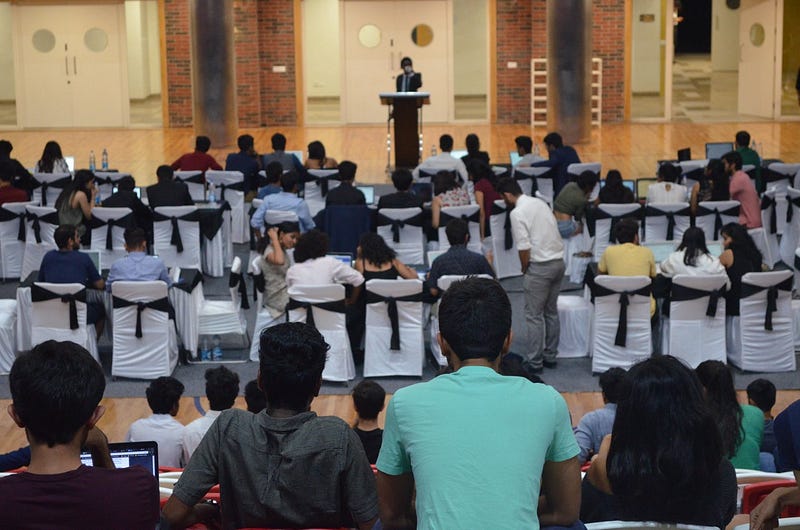
The APL auctions took place on 10th of April, an intense 4–5 hours of bidding by adventurous investors who had to shed a huge amount of money (Rs. 5000) to own teams. The owners were sweating like they were students who heard an unexpected knock on their door and started panic-spraying deodorant all around the room. But to be fair, the thought of losing the tournament and being able to afford nothing but mess food for a week is indeed terrifying.

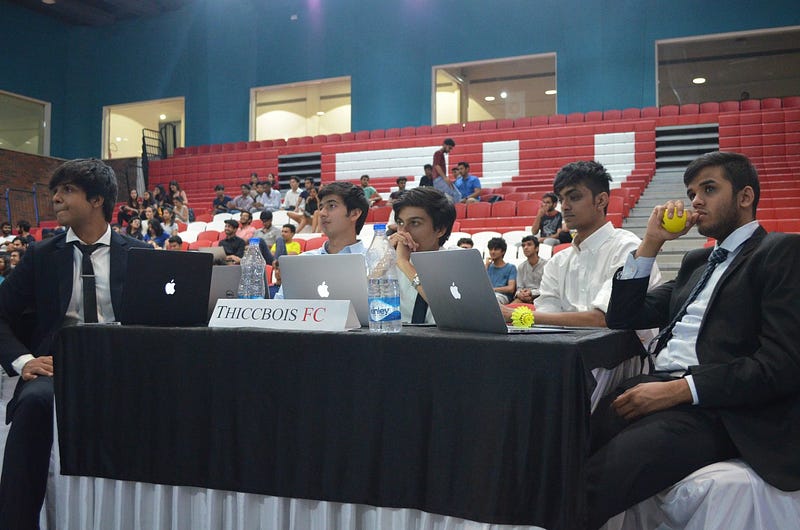
The stage was set. The power-point was successfully projecting despite somebody stealing HDMI cable. Technical difficulties like these didn’t affect the APL organizing team as they somehow figured out what the technician’s number was and called him to save the day. Incredible scenes. There was a lot of back and forth between teams, some of whose names gave me acid reflux(I could feel the sour taste in my throat). Personally, I am astounded that my first ever professional appearance in football is for Thiccbois FC. However, let us move on to the players of the night.


Jai Sahni Mohanty, was sold for a whopping 92 million Ashokan bucks to Nutty Master, followed by Chirag Chinappa for 69 million Ashokan bucks to Wiley Warriors. Philip Deweyi, who was expected to be the most expensive player, was sold for 63 million to Las Magnifico, and at that price was quite a steal. Divyaj Sharma (Team Gogo), Zoheb Bedi (Brute Warriors FC), Edwin Joseph (Team 4 play), and Swasti Acharya (Clockwork FC) were all retained by their respective teams by using their option of Right to Match. Manan Bhan is the most expensive Tier 3 player going to Gabru FC for 42 million Ashokan bucks. Thiccbois FC made an impressive signing in Shourjo Chatterjee for just 16 million Ashokan bucks.

Teams to look out for:

Brute Warriors FC: They have built a well-rounded team with Rudra Cariappa, Zoheb Bedi, and Jai Suneja starting for them and Aditya Khemka holding the line with Ananya Marie. The have the players to transition the ball from the back smoothly compared to the most common tactic of hoofing it up and waiting for God’s intervention.

Gamli’s VI: Sourya Reddy and Rohan Chaudhuri, two really skilled players who will for the spine of the team eventually. Sourya Reddy to cover the back line while Rohan Chaudhuri plays box to box carrying the ball up, looking for openings. Saaransh Mishra, should also be able to help with the backline, and pushing up as and when required. They have enough players to run up and down the pitch, playing some end to end football.

Team 4play: The defending champions lost their talisman Aditya Shetty to graduation this year, but managed to retain Edwin Joseph, and have found a reliable player in Rohan Poddar. They have an all-round team Clinton Manoti, Pixie, and Aditya Jaishankar capable of moving the ball around.


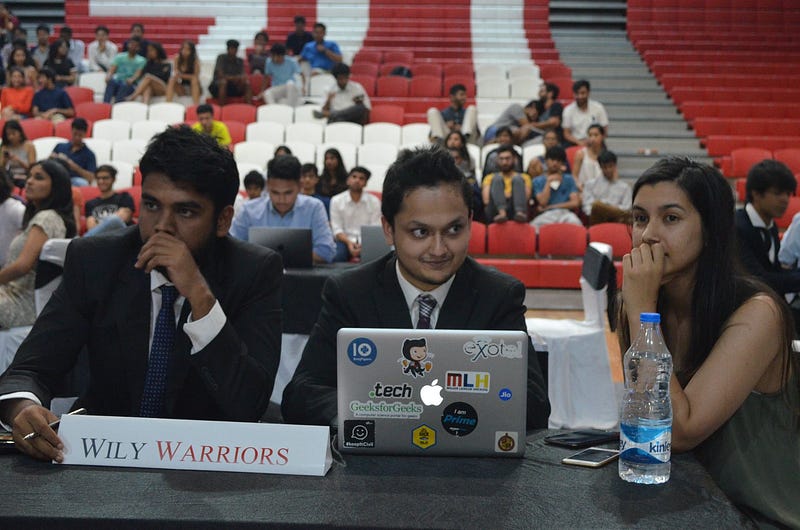
Wily Warriors: Chirag Chinnappa will be leading the team with Barun Parruck and Ruheena Tankariwala to support him in midfield and defense respectively. Ishan Bhattacharya supporting in midfield provides more solidity to the team. They should be able to get the majority of the possession in their games and play their way through the opponent’s defense.

Overall, it seems like an exciting tournament and an incredible way to spend the weekend. Turn up in large numbers to watch the matches. The Premier League™ can wait. The Ashoka Premier League is here to take over.

Ashokan Entrepreneurs | Dabbawalas

Anirudh Pisharam, Class of 2019

Not many student-led start-ups in Ashoka can boast to have had as much impact on the campus population as the Dabbawalas. Where many saw a deficit in Ashoka’s relative geographic isolation from New Delhi, two young entrepreneurs saw an opportunity. Dabbawalas began as a food-delivery start-up back in October 2016 and has grown into much more. Indeed, they have been running pretty much non-stop over the last 4 semesters, where they have served countless happy and satisfied customers.

I sat down with the founders, Abhinav Verma and Anirudh Rao, both from the Undergraduate Batch of 2018, to understand their fascinating journey in building a successful start-up on our campus.

How did it all begin with Dabbawalas?

Anirudh: We’re both foodies, and I often used to visit Delhi over the weekends to explore different places. My friends would often ask me to get them some food, and I’d end up carrying 5–6 packets of food on the shuttle. It was Abhinav who then told me, “Why don’t we do it for money?”. It was a genuine problem; people wanted food from Delhi, but they couldn’t have it.

Abhinav: The way Dabbawalas runs today is not how we initially started our operations. What we did in the beginning was exactly was Anirudh was doing; a food delivery startup with a commission. Every week we’d plan out trips to GTB Nagar or Khan Market. We would share a menu on Google Drive and people could place their orders. We’d charge them a 15% fee. Back then, we used to literally have these dabbas — these suitcases — filled with food like pasta, pizzas, donuts and Khan Chacha’s rolls.

The Dabbawalas logo

Speaking about the risks, what are some of the biggest challenges you’ve faced?

Anirudh: Sometimes if the shuttles get cancelled or we fail to get an Uber, we have had to hail a local auto with 30 boxes of pizzas. Then there have been times when for some reason the sale hasn’t gone well, and we’ve had to go around selling our food like street vendors. There were even situations when we have had to eat the food because there was so much left!

Abhinav: We can’t really complain about that, can we? (Laughs) Also, generally working in the food industry, transporting the food and keeping it warm, equipping ourselves with everything from plastic gloves to even buying a momo steamer and running it live in the mess; it’s been fun but has its own set of challenges.

Anirudh: Then, of course, there was the big one — Banjaara 2.0! What happened was that the Banjaara team had told us that a certain number of people would turn up, and for all the fair reasons, that did not work out. To be fair, there was miscalculation on our part as well. It turned out to be a gross miscalculation, and we barely sold half of our order. Financially, it was quite burdensome, and we failed to break-even: this was one of the rare instances where we made a loss. We spoke to our vendors and tried to reduce the order in the last minute but that didn’t really help. Banjaara was an experience — I wouldn’t say a bad one — but it did slow us down. We were riding high our horses and doing well, but this brought us back down.

Often things do not work out as planned. Could you tell me an experience where you had to improvise a solution?

Anirudh: One of the things we’ve learnt with Dabbawalas is crisis management. We had a unique experience during the winter haat sale this semester. We had ordered Pizzas and Biryani, and for some reason, none of our team members could go to Jahangirpuri Metro Station to collect the food. I thought we could do some jugaad and talk to the security guard at the Metro Station and ask him to put the food in the empty shuttle, but in the last minute, he told us that this would not be possible. So, I booked an Uber, called him up and requested him to get the food from Jahangirpuri to campus. We asked him to load the food, and to be quick; this was at 12 PM and the haat was to begin at 1 PM. We didn’t have a choice, we had to trust him. Half an hour later, I get a call, “Sir, you have to come to Rai Police Station to collect your food”. Turns out, his car met with an accident, and the cops had stopped him. So, I had to take an auto and go to the Rai Police Station. Thankfully, nothing bad had happened to the driver or the food. The car was severely damaged, though, and I felt sorry for him. So, I gave him whatever money I had and thanked him. I got into another car, came to campus, and we sold the food. I was a little late, but things worked out.

How is the entire leadership structured and how is Dabbawalas is organized?

Abhinav: Right now, we’re six people — Anirudh, Aashay Verma (UG 19) and I, we’re the equity holders and split the profits. We have two people from the UG 20 batch — Jonathan Fernandes and Vinayak Sahi — and one more from the UG 19 batch — Preetha Datta. They work on a weekly basis, where they’re paid depending on how much time they spend working with us.

Anirudh: It depends on the hours as well as the scale. For example, if the Banjaara sale had gone better, we would’ve paid them better, because the volume would’ve been larger. It also depends on the kind of work they do, like who goes to Delhi to get the food, who does the delivery, and so on.

L to R: Preetha, Jonathan, Anirudh and Vinayak. Credits: Caperture, The Photography Society of Ashoka University

How was your experience of expanding the team?

Abhinav: It was exciting. We were going through the process of building an organization, which was quite interesting. We even booked the meeting rooms in the Student Commons, and put up posters saying “Dabbawalas Interviews”. It was fun doing that. It was also humbling knowing that an organization that you create can help students become financially independent. I’m talking strictly from a student’s perspective, as people who work with us don’t really need money from home; they earn a sufficient amount just to survive off our sales, so being able to do that while having fun is great.

Anirudh: When we started off, it was just the two of us. Aashay came in last year (2016–17) because he was interested in what we were doing and the whole model we were following. He personally spoke to us, and that’s how he became a part of the team. This year, we thought that we need to start expanding, and hence we’d need more people.

How have you adapted to changing dynamics, say in terms of increasing student population and the presence of new competitors?

Anirudh: I’d say that there is healthy competition. We’re glad that people are doing something like what we’re doing. We shouldn’t start to monopolize the business. Whoever the competitors are, we’re on good terms with them, where we inform each other about our upcoming sales to not eat into each other’s’ business. That way it’s good, it’s healthy. As people are starting to do this, we’ve also had to change some of our strategy, because if we do the same thing, it becomes redundant.

Abhinav: Competition has forced us to expand and start selling things others haven’t sold previously. We’ve started selling brownies and more appetizers. The competition has made it exciting and has ensured that this doesn’t become a boring job, and it’s also useful for the student body as it now has increased variety in term of food options. It’s also exciting because as the student body grows, we also grow with it due to increased demand. I mean, last year I would’ve never thought we’d order 50 kilos of biryani and sell all of it, and that’s where we’re moving to now.

Pizzas at Jahangirpuri Metro Station for a typical sale

How do you manage your supply chain?

Abhinav: It is a learning process, right from approaching vendors to negotiating prices, figuring out how to get the food from there to the mess on time, and delivering it hot. In general, we take it one step at a time. So, if we need to find vendors, we look around in GTB Nagar and find places we like to eat at. I particularly like to eat at Spezia Bistro, and we’ve built a great rapport with the owner now. We usually call them a day in advance, and they send it to the Jahangirpuri Metro Station by 6–7 PM on the day of the sale, from where we bring it to campus on the shuttle in time for dinner.

Anirudh: When we sold Momos, we got in touch people who were vendors for a couple of restaurants, told them that we’d be buying a fixed quantity every week, and quoted our price. For Biryani, we went on a tasting tour to Jama Masjid, and to other iconic and old places, and chose the best option considering three main factors — price, taste and safety. We follow this pretty much for all the new things we offer.

How has the support been form the non-student body and the administration?

Anirudh: They’ve been very helpful. We aren’t a registered club, because this is a money-making project. To get our own official Email ID, we approached the Office of Student Life, and we spoke to Ms. Vanita and Ms. Rashmi. We convinced them that getting this would make it more streamlined and efficient for us, and they agreed. Apart from that, being felicitated last year as the “Best Entrepreneurial Initiative on Campus” was really motivating, and made us realize that we needed to take this up in a bigger way. The faculty has been great in supporting and buying from us. Professor Rudrangshu Mukherjee (besides many other non-student staff) is a regular customer and has given us a lot of feedback.

How does the future look for Dabbawalas?

Abhinav: Getting more people on board was a conscious decision as we knew we’d need some people to carry this forward, and we’ve been happy with what we’ve seen. We think they’re more than capable of carrying this forward. We don’t want to dictate everything to them.

Anirudh: I’ll be leaving after graduating this year, but Abhinav will be staying on for the fourth year, so we’re devising a concrete plan. There are a few things like loyalty programs, dealing with more types of food, and probably expanding the team as well. But we’re still working on a plan.

Humble beginnings

What would your advice to other student entrepreneurs on campus be?

Abhinav: If you’re driven and passionate, you should start something, and once you start, don’t give up. There have been so many issues and difficulties with the way we’ve run our business, we’ve learnt from the problems, mistake after mistake. It’s a fun process and it’s important to learn from it.

Anirudh: I think it’s important to also be passionate about your initiative, and not just care about money, because if you do the right things, money will come. Even when there is failure and you lose money, it is important to be passionate to be able continue. I also think having the right vision is important. You shouldn’t do something just for two months, and once you make Rs. 20,000, just let it go.

This interview has been edited for clarity.

Abhinav Verma and Anirudh Rao (Undergraduate Batch of 2018) are the co-founders of Dabbawalas.


Ashokan Entrepreneurs is an initiative to put under the spotlight budding entrepreneurs among the existing students and alumni of Ashoka University.
Coup de Théâtre: Cannes v/s Netflix

Vandita Bajaj, Class of 2020

After banning flats for women and selfies, Cannes-connoisseurs seem keen to say au revoir to Netflix and other streaming services.

Despite streaming services taking over the way we consume video content, the Director of the Cannes Film Festival, Thierry Frémaux, holds the view that “the history of cinema and the history of the internet are two different things”. In the 2018 edition of Cannes, Netflix has been banned from competing for the most prestigious award-the Palme d’Or. “Cannes is choosing to be stuck in the history of cinema, that’s fine,” responded Ted Sarandos, Netflix’s Chief Content Officer.

Last year, Netflix tried to circumvent the rule by trying to secure limited release permits for their films in France. This attempt to release the film in theatres and stream it on the same date was met with an unavoidable hurdle; according to French law there has to be a gap of 36 months between the move of a film from cinemas to streaming services. Sarandos insists that, this year, “the festival has chosen to celebrate distribution rather than the art of cinema”.

Image source: France Amerique

This comes after two Netflix productions — Okja and The Meyerowitz Stories — were allowed to, for the first time, be part of the competition in 2017. This didn’t go down well with fest-goers and French filmmakers, who blame streaming services for the demise of theatrical releases. Immediate measures were sought to be taken, a new rule was introduced which would be put into effect from this year. The rule states that all movies wishing to compete in the Cannes Film Festival in 2018 must commit to being distributed in French theatres. Frémaux was hopeful that Netflix would comply and release its movies in French theatres.

Netflix CEO Reed Hastings voiced his disgruntlement in a Facebook post which read “the establishment [is] closing ranks against us”. In the most recent turn of events, Netflix has withdrawn the five movies that were to be premiered at the event. Sarandos said “it won’t be good for us to be there”. He sees the rule as a lack of Cannes’s ability to modernise and support new-age films and filmmakers. While Netflix wasn’t barred from screening their films, Sarandos believes that “There’s a risk in us going in this way and having our films and filmmakers treated disrespectfully at the festival. They’ve set the tone”.

Prior to the formal statement by Netflix, producer of The Other Side of the Wind, Frank Marshall, commented: “we are collateral damage if they (Netflix) decide not to go”. The movie was acquired by Netflix in March of last year; they funded the post-production of this unfinished Orson Welles project. According to him, “there would be no movie without them (Netflix)”. Marshall, among many others, chose to stand behind the streaming platform. The late Orson Welles was a recipient of the top honour at the Cannes (before the creation of the Palme d’Or) and was involved with the festival as member of the jury. Welles’ daughter hopes that her father’s film is able to “bridge the gap between Cannes and Netflix” and asked both parties to reconsider their actions.

Netflix subscribers each have their own Netflix Originals they swear by (and excessively binge-watch). Streaming platforms have given independent filmmakers access to funds and audiences; the tens of millions of dollars and an ever-expanding viewer base mean that indie-filmmakers have the chance to tell their stories. The subscribers tend to be more experimental with what they watch since the risk of feeling dissatisfaction upon losing money is neg. Moreover, in the recent past, productions by Amazon and Netflix have made their mark at calendar events like the BAFTAs, Golden Globes, and even the Oscars. This year’s Oscar winner for Best Documentary Feature, Icarus, and last year’s Best Documentary winner, The White Helmets, were both Netflix productions.

Hollywood actor Will Smith, who was also a jury member at Cannes last year, came out in support of Netflix. He insisted that Netflix has no impact on whether one chose to go to the theatre to watch a movie. Netflix, in fact, enables one to access a wider range of content and allows people to watch films they never would have seen otherwise.

Is the ban on Netflix a mark of Cannes’ dedication towards preserving the experience of going to the cinema and watching movies on the big screen? Or is it simply their inability (and unwillingness) to keep up with the times?

The French have always cherished the right to express freely, moreover they are known to be embracing of revolutions. Cannes-purists sure have some soul searching to do now that they have ended up with what could be called a full-blown, irreparable faux-pas.


Vandita Bajaj is an Arts & Culture staff writer for The Edict.

A lesson on Social Entrepreneurship by Prof. Muhammad Yunus

Devvrat Raghav, Class of 2019

Among the several eye-catching events on April 6 2017, one of the most eagerly anticipated was an address by Prof. Muhammad Yunus at the invitation of Ashoka’s Centre for Entrepreneurship (CfE). Speaking in the context of his recent book, titled “A World of Three Zeros: The New Economics of Zero Poverty, Zero Unemployment, and Zero Net Carbon Emissions”, he illustrated the ideological and operational challenges faced by social entrepreneurs.

Needless to say, Prof. Yunus has enjoyed a long and successful standing as a social entrepreneur, perhaps best reflected in his role as the founder of Grameen Bank — the biggest micro-finance banking institution in Bangladesh. By turning it to a non-profit ‘social business’, he was able to revitalize the future of thousands of economically-marginalized households in the country. This culminated in both him and the bank receiving the Nobel Peace Prize in 2006.

Prof. Muhammad Yunus at Ashoka. Credits: CfE, Ashoka University

Drawing from these experiences, he illustrated how traditional banking systems had effectively excluded a large mass of people from gaining access to much-needed credit, thereby condemning them to a cycle of poverty. The need for collateral and security had limited both entrepreneurial spirit and economic mobility. He argued that any change in this system must come from those who seek not profit, but economic equity.

After all, that is the core principle of social business — profit eschewed in favor of enabling social improvement, such as by allowing poor people to engage in self-sustaining employment. “But this is not the same as charity” said Prof. Yunus. In the case of charity, there must be people who are ready to keep giving unconditionally and with no expectation of a return.

On the other hand, he said that social business does not require such giveaways. Rather, it depends on the basic trust between individuals that ensures the investment’s return. According to Prof. Yunus, this was the real reason behind the Grameen Bank having a 99% recovery rate of loaned funds.

This trust allowed the Bank to establish over 2,600 branches and lend to nine million people, 97% of whom were women. As a result, thousands of small-scale enterprises were created and operated by poor people who had finally gotten a chance to break the cycle of poverty and unemployment. On a larger scale, he said that this shows us a possible path to reaching two of the ‘three zeroes’, namely ‘zero poverty’ and ‘zero unemployment’ — something which a profit-focused market system cannot ensure.

In fact, a broader point that Prof. Yunus stressed upon was the inadequacy of how human behavior is perceived within the economics curricula. He attested that the notion of a selfish, utility-maximising individual is belied by empirical observation of the Grameen Bank’s debtors, who had repaid the principal and validated the Bank’s trust.

Having shared the Grameen Bank’s story, he further called upon the next generation to join the wave of social business, rather than to restrict themselves to the contemporary capitalist system. Not only would that expand the scope and scale of social business, it would also allow poor people across the world to gradually move into better conditions that could facilitate greater energy efficiency. After all, by keeping a large part of human society away from technological innovation, it becomes impossible to truly mold our energy consumption needs and patterns into sustainable practices that will yield the final zero, i.e. ‘zero carbon emissions’.

He concluded by saying that ultimately, the attainment of all three zeroes relies on a shift towards social entrepreneurship, such that it helps human beings come together to maximize their collective gain and minimize the degradation of the environment they live in. Therefore, he said, cooperation, and not just competition, is required if humanity wishes to tackle the biggest problems that have implications for every single one of us.

Ashoka over the Weekend | Newsflash

On the weekend of 6–8 April 2018, two events that had been marked on the Ashokan calender for days took flight. The Ashoka Business and Consulting Club hosted the Ashoka Business Conclave on 6 April.

The Conclave comprised three competitive events: Situational Marketing, Crisis Management, and Best Manager.

The Business and Consulting Club also hosted several eminent speakers who came to deliver talks. The speakers included: Snehdeep Aggarwal (Founder of Bharatiya Group), Kshitij Garg (Founder of Healers at Home), Ashoka University Pro-Vice Chancellor Sankar Krishnan(Ex-Partner at McKinsey Consultancy India), and lastly, Nobel Peace Prize winner Mohammed Yunus (Founder of Grameen Bank).

Pictured: Ashoka Business and Consulting Club

While the Conclave was underway, Ashoka also played host to several debators and adjudicators from Delhi University and other colleges across India. The Ashoka Parliamentary Debate was hosted by the Ashoka Debating Union from 6–8 April. There were five preliminary rounds, from which eight teams made it to the quarter finals.

The final round took place on Sunday evening between Lady Shri Ram College and a mixed team of students from Hindu College and Delhi College of Arts and Commerce. The motion for the final was “This House, as minority communities, will deprioritise experiential understandings of oppression in advocacy, in favour of data driven approaches”. After a gruelling debate ensued, the panel of seven adjudicators announced the team from LSR as winners (6–1).

It was an exciting weekend at Ashoka, which witnessed the hardwork and efforts of both the Ashoka Business and Consulting Club and the Ashoka Debating Union.

Why You Can’t Check CCTV Footage for Lost Items Anymore

Rohini Sharma, News Reporter, Class of 2020

On January 31st 2018, the Director of the Office of Student Life informed the students of the University about the institution of a new guideline regarding access to CCTV footage in cases of theft. Citing the the University’s commitment towards protecting the privacy of its students, Ms. Rashmi Singh notified, that CCTV footage will not be made available to students in case of any loss of personal property in University campus including Halls of Residence.

The only footage that will be accessible to students will be that of CCTV cameras installed outside the library in case of any loss of personal property kept in shelves there.

In a short interview with me, Ms. Singh emphasised that discourse about access to CCTV footage and privacy has persisted ever since the University was essentially a startup. She added that at the beginning of the current academic year, the concerns were sincerely accentuated to the table for discussion among the senior leadership.


The decision-making process wasn’t restricted to the senior leadership and did trickle down to involve staff members, Resident Assistants and YIF Committees. The two members from the House of Representatives involved were Edwin Joseph and ex-student government President, KC Sachin.

Student Government’s Role

KC Sachin oftentimes acted as a link between the House of Representatives and the administration because all student representatives’ schedules couldn’t be aligned simultaneously to discuss the matter at hand. The former President of the HoR told The Edict that he attended the first meeting concerning this issue around November 2017, in the wake of the Ryan International School murder case. Sachin put forth issues regarding theft against the policy in the meeting, but clarified that his personal opinion was in favour of restricting access to CCTVs. He cited privacy as his main concern, fearing the possibility of the system being hacked.

An inconclusive debate regarding the issue was held on the Student Government WhatsApp Group with members being both for and against the restrictions being introduced. Consequently, Sachin met with Ms. Singh and the decision was passed with his agreement. Other members of the HoR weren’t pleased with the decision because of insufficient deliberation and a collective vote not being taken on this issue in the House.

However, when asked about the meeting in which he assented to the decision of restricting access, KC says “Here, I would say that it was a mistake on my part and that we should have investigated the legal aspect (being presented by the Administration) further, but I took them at face value there”.

Valuable Items

Another question looms over the ‘degree of preciousness’ of the object/objects that are lost. In such situations, it becomes virtually impossible to set standards around the same and have differential attitudes and provisions over such a subjective matter.

Ms. Singh responds to this apprehension by assuring that the concerned student may reach out to any member of the administration, who would in turn help solve the issue in the best way possible without making CCTV footage accessible. Some methods of recourse might include reporting the loss at the Lost and Found Department, spreading the search for the object through word of mouth and sending out messages or emails for the same.

Ms Singh doesn’t falter to mention that “At certain exceptional occasions of loss, it is not as if we are going to be blinded by the policy in place, and by all means the intention is to help and support”.

She asserted that the decision hasn’t been instituted looking only at the sheer number of requests to view CCTV footage that reached the IT department, the administration and Ms. Singh herself. When there existed no clear policy regarding the access of this nature, the college did provide footage worth of hours.

Ms. Singh also emphasized the legal aspect of such a policy. The privacy of individuals belonging to the University was being seriously compromised under the old policy. She argues that it must be taken into consideration that misuse of the same might lead to harmful consequences for any individual- students, faculty and staff members alike.

There is also an important and rare exception that extensive discussion has allowed for, that is highlighted by Ms. Singh. She says “In the rarest of the rare situations we keep the provision of footage, if there has been a serious incident on campus and committees like CASH (Committee against Sexual Harassment) or CADI (Committee against Disciplinary Infractions) would request. The process now, is that the only space where that approval (of accessing CCTV footage) will come from, is the Vice Chancellor and the Pro Vice Chancellor.”